Birding in Espadán-Mijares: calendar and main locations by season
Birding in Espadán-Mijares: calendar and main locations by season
Birdwatching in Espadán-Mijares changes a lot depending on the month you go. Looking at a reservoir in January is not the same as hiking through a forest ravine in May, nor does it make the same sense to stand under a rocky cliff on a summer morning as it does to climb to a high point in early autumn to look for migrating birds of prey.
The advantage of this area lies precisely in this mix. Within a few kilometers, you'll find reservoirs, rivers, farmland, villages, pine forests, cork oak groves, and rocky cliffs. The Espadán-Mijares Commonwealth's birding guide organizes it into five observation points: Ribesalbes, Vallat, Fanzara, Tales, and Torrechiva. If chosen wisely, these locations allow for a well-planned outing without overcomplicating things.
Birding in Espadán-Mijares: what changes from one season to another
A word of caution before we delve into species: birds don't operate like a train timetable. There are clear patterns, yes, but rainfall, water levels, wind, human activity, fires, agricultural practices, and chance also play a role. That's why it's important to think in terms of habitats, not just names.
Spring and summer typically bring more activity, songs, breeding, and the presence of insectivorous birds. Early autumn is of interest due to the migratory passage of large birds of prey and soaring birds. Winter, on the other hand, requires closer observation of reservoirs and calm stretches of water, where various species find refuge when they migrate from the north.
Practical calendar: what birds to look for in each season
|
Season |
Where to look first |
Reasonable birds and tracks |
Field Council |
|
Spring |
Riverbanks, crops, ravines and forests |
Swallows, swifts, martins, golden oriole, nightingale, warblers and booted eagle. |
Get up early and listen. Don't complain. |
|
Summer |
Rocky outcrops, villages, crops and water points |
Alpine swift, crag martin, kestrel, hoopoe, goldfinch, serin and great tit. |
First and last hours. The heat rules. |
|
Autumn |
High points, cliffs and valley corridors |
Birds of prey and gliders in flight; occasional storks, vultures and falcons. |
Good visibility and moderate wind. Scan the sky. |
|
Winter |
Reservoirs, dammed rivers and tranquil shores |
Cormorant, grey heron, great grebe, little grebe, mallard, coots and gulls. |
Observe from a distance and avoid stirring up birds. |
Five key locations to avoid going in blind
The guide proposes five ornithological observation points.CEach one represents a type of habitat and, therefore, a different way of seeing. If you're short on time, choose based on atmosphere and season, not proximity.
|
Point |
Dominant habitat |
Reference coordinates |
Better approach |
|
Ribesalbes - Arquet Fountain |
Reservoir and calm waters |
40.017232, -0.260478 |
Waterfowl, wintering and leisurely observation from a distance. |
|
Vallat - The Mill Rock |
River and riparian forest |
40.027991, -0.335774 |
River birds, wagtails, kingfisher and small forest birds. |
|
Fanzara - Fuente el Cantón |
Village, crops and urban environment |
40.019482, -0.312899 |
Common birds commonly observed: swallows, swifts, sparrows, hoopoes, goldfinches. |
|
Tales - Camino de l’Engolidor |
Mediterranean forest and ravines |
39.946942, -0.311610 |
Forest birds, birds of prey and discreet species of scrubland and shade. |
|
Torrechiva - Buitrera |
Rocky cliffs |
40.044788, -0.390978 |
Vultures, peregrine falcon, red-billed chough, crag martin and blue rock thrush. |
- Ribesalbes - Fuente del Arquet: the starting point for the water features
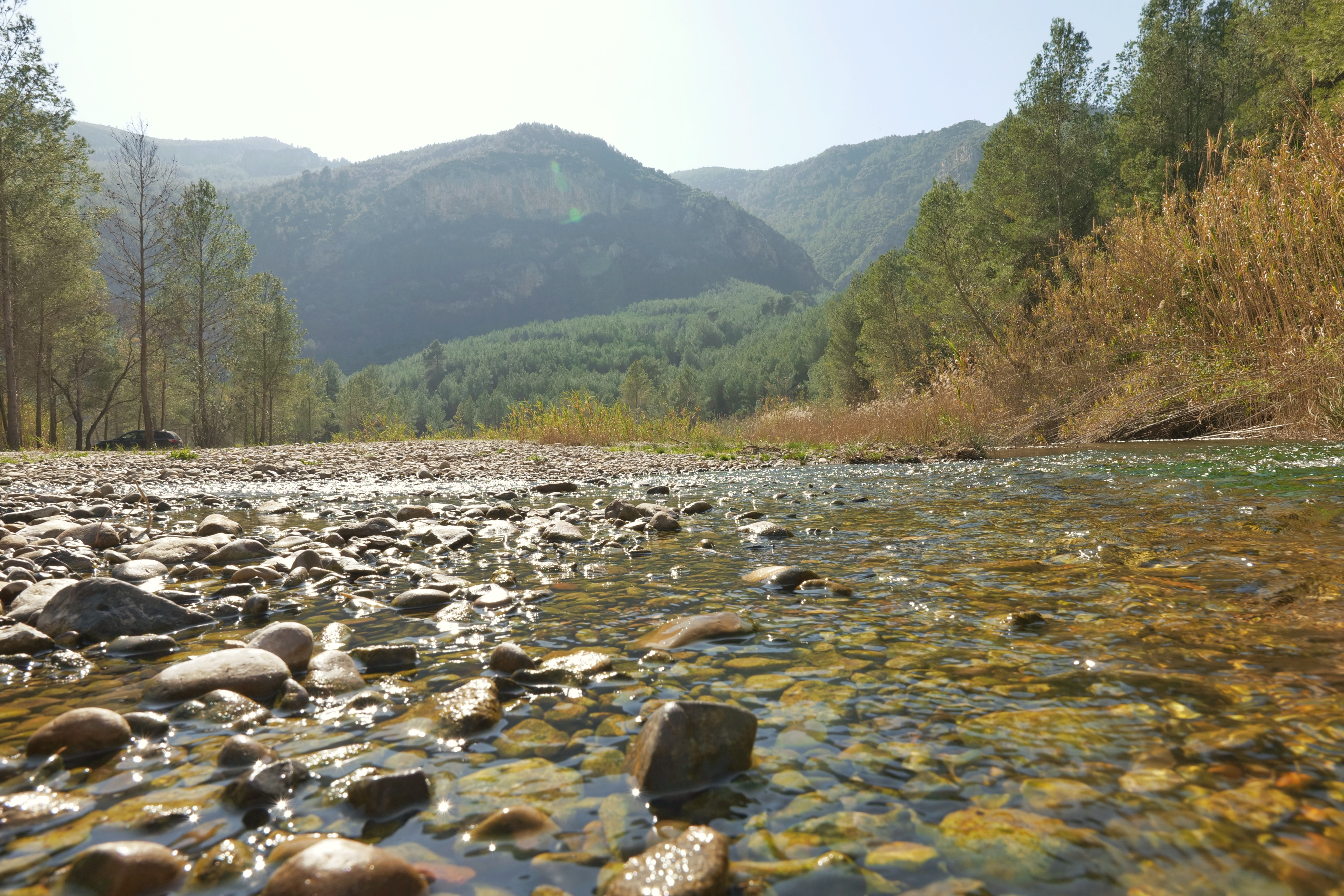
Ribesalbes is a great option for those seeking a peaceful first outing. The Mijares River and its dammed sections create refuge areas for waterfowl, which are particularly interesting in winter. Here, it's worth looking for grey herons, great cormorants, little grebes, great crested grebes, common coots, mallards, and various gulls.
The key isn't getting closer, but getting a better look. A spotting scope helps, but decent binoculars are perfectly adequate if you avoid disturbing the tranquility of the shoreline. During migration, the guide also notes occasional sightings of white and black storks in these reservoirs. Don't expect them, but keep them in mind.
- Vallat - La Roca del Molino: living river, shade and patience
Vallat changes the pace. La Roca del Molino doesn't invite you to gaze at a wide expanse of water, but rather to read the river itself: stones, current, riparian vegetation, insects, and low-hanging branches. In this type of stretch, you'll find wagtails, common moorhens, kingfishers, blackbirds, nightingales, warblers, flycatchers, and golden orioles at the appropriate time of year.
One detail deserves attention: in the upper reaches of the Villahermosa and Mijares rivers, you can find the dipper, a very rare species in the Valencian Community. If it appears, don't chase it. Observe it from a distance, note its presence, and let the river do its work.
- Fanzara - Fuente el Cantón: common, but not minor, birds
Fanzara demonstrates something that birdwatchers learn early on: the commonplace also teaches. The villages, rooftops, walls, orchards, and fields support a very visible bird community. Sparrows, swallows, house martins, swifts, white wagtails, greenfinches, goldfinches, great tits, hoopoes, and black redstarts can make for a very rewarding morning if you look closely.
This is a particularly useful spot for families or beginners. You don't need to embark on a long hike to learn to distinguish flight, silhouette, song, and behavior. At night or at dusk, the old olive groves also serve as a reminder that other winged fauna thrives: the European little owl finds a classic habitat in these environments.
- Tales - Camino de l’Engolidor: forest trees among pines, holm oaks and cork oaks
The Camino de l’Engolidor takes on a more forested character. In the Sierra de Espadán, pine forests alternate with holm oak and cork oak woodlands, the latter being very typical of the area. Here, you won't always see the entire bird; often you'll catch a glimpse of its shadow, a call, a falling pine cone, or the slightest movement among the branches.
Booted eagle, tawny owl, wren, long-tailed tit, goldcrest, great tit, coal tit, chaffinch, robin, Sardinian warbler, thrushes, wood pigeon, and jay may all be part of the day's outing. The jay, moreover, is one of those birds that explains the forest better than a sign: by hiding seeds it sometimes forgets, it contributes to natural regeneration.
- Torrechiva - Buitrera: rocky outcrops, birds of prey and distance
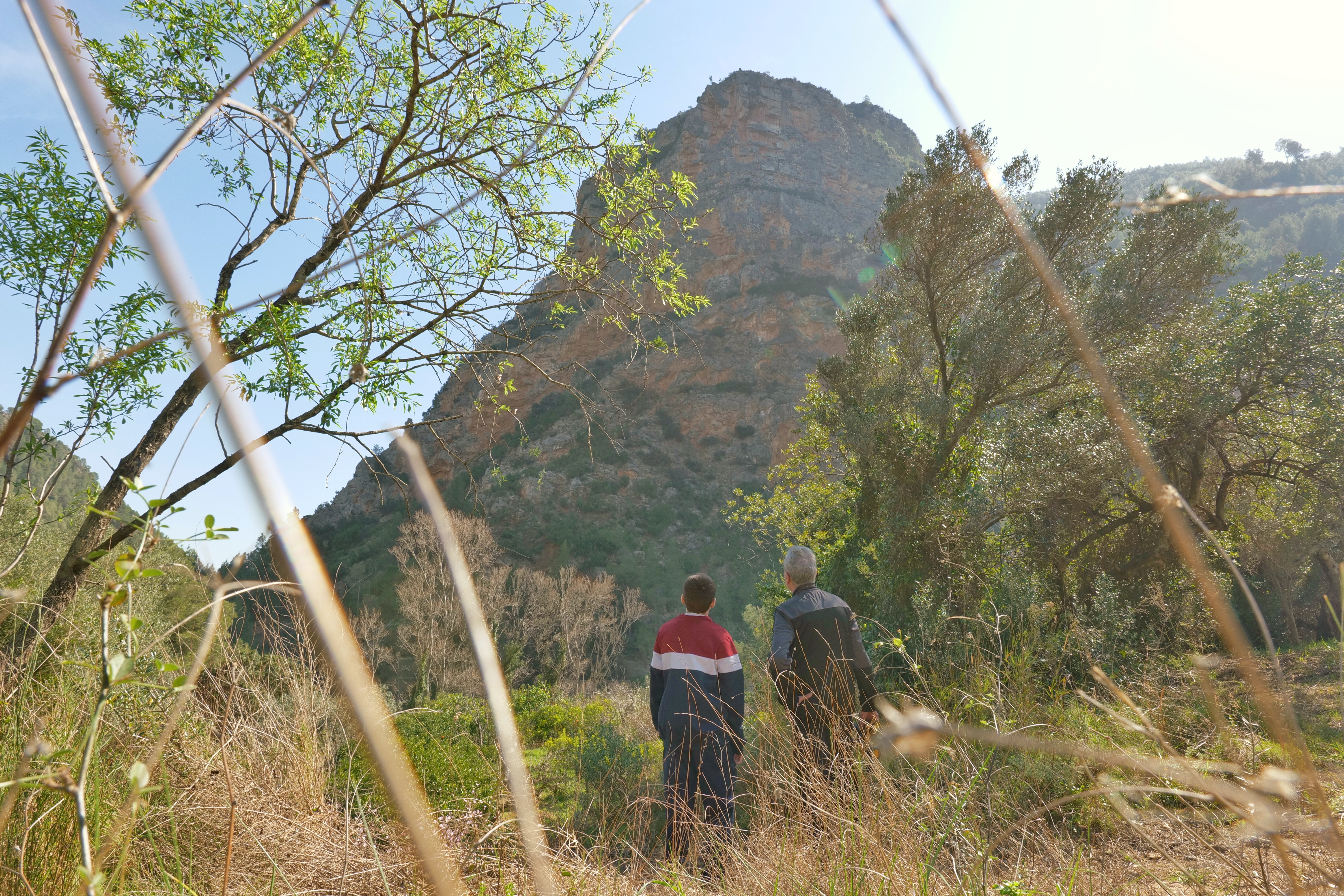
Torrechiva offers a different kind of escape. The rocky cliffs are observed with binoculars, focusing on ledges, white patches of droppings, incoming flights, and perches. In these environments, species adapted to verticality appear: griffon vulture, Egyptian vulture, peregrine falcon, red-billed chough, common raven, blue rock thrush, crag martin, and alpine swift.
The professional rule here is simple: distance. If a raptor changes flight, protests, or abandons a ledge, you've gotten too close. During breeding season, caution is more valuable than a photo. In early autumn, high vantage points like these also become valuable for spotting migrating raptors and other soaring birds.
How to organize a birdwatching route without wasting the day
For a short outing, don't try to cover all five areas. It's better to choose two complementary habitats. For example: Ribesalbes at dawn for waterfowl and Fanzara later for urban and farmland birds. Or Vallat early and Tales later, if you're looking for riverside and woodland birds.
For a more specialized day, separate objectives: if you want vultures and rocky outcrops, Torrechiva deserves a calm atmosphere; if you want to learn about common species with inexperienced people, Fanzara is more rewarding; if you are looking for winter, start with water; if you are looking for spring, listen before you walk.
Minimum equipment: binoculars, notebook or mobile phone for taking notes, bird guide, water, comfortable shoes, and inconspicuous clothing. A telescope is helpful at reservoirs and cliffs, but it doesn't replace good judgment. Nor is it necessary to whisper all the time; simply avoid entering the field as if no one else lived there.
Common questions before birdwatching in Espadán-Mijares
What is the best time for birdwatching?
Spring and summer are usually the busiest seasons for birdwatching and listening, especially in forests, riverbanks, villages, and cultivated areas. Even so, winter offers valuable opportunities at reservoirs and other bodies of water, and early autumn can be excellent for observing migrating birds of prey from elevated vantage points.
Can I see interesting birds if I'm a beginner?
Yes. In fact, starting with common species is the smartest approach. Distinguishing between a swift, a swallow, and a martin; recognizing a kestrel; differentiating a heron from a cormorant; or identifying a kingfisher in rapid flight teaches more than chasing after a rarity without context.
Is an ornithological guide necessary?
Not always, but it helps a lot if the goal is to learn. An experienced person shows you where to look, when to stop, and when to give up. In birdwatching, not disturbing the birds is just as important as seeing them.
Can I take pictures of birds?
Yes, as long as the photo doesn't overshadow the bird's behavior. No approaching nests, using calls, blocking its path, or forcing it to fly. A good picture doesn't compensate for disturbing a bird, especially during breeding season.
To go out with binoculars and return with a clear head
Birdwatching in Espadán-Mijares isn't about ticking off species like trading cards. It's about understanding why a heron uses a quiet bank, why a swift almost never lands there, why cliffs attract birds of prey, or why a shaded ravine can sound more like something than it actually looks like.
If you go in spring, listen. If you go in summer, get up early. If you go in autumn, watch the sky patiently. If you go in winter, respect the water. And if you can only choose one piece of advice, stick with this: choose the habitat before the bird's name. That's where birdwatching in Espadán-Mijares truly begins.